Location:
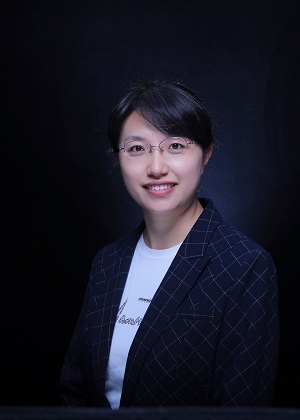
Wei Shi, Ph.D.
Professor
School of Environment
Nanjing University
Email: [email protected]
ORCID: 0000-0002-6263-5664
Biography
Prof. Wei Shi is a Professor and Associate Dean at the School of Environment, Nanjing University. She is a recipient of China's prestigious National Science Fund for Distinguished Young Scholars. Her research program focuses on deciphering the environmental fate, toxicity, and risks of organic pollutants by leveraging big data analytics and AI. To this end, her team has developed a suite of high-throughput alternative testing platforms and computational toxicology methods, which have been integrated into internationally recognized toolkits, including the VEGA-HUB and the OECD QSAR Toolbox. A key innovation from her lab is the creation of an AI-powered Effect Directed Analysis framework, which enables the precise identification of bioactive toxicants in complex environmental matrices. With over 100 publications in SCI-indexed journals, she also contributes to the scientific community as an Associate Editor for Environmental Science & Technology.
Education
2007.09-2011.06: Nanjing University, Environmental Chemistry, D.Sc
2003.09-2007.06: Nanjing University, Environmental Science, B.S.
Professional Experience
2023- Present: Nanjing University, School of Environment, Associate Dean
2019- Present: Nanjing University, School of Environment, Professor
2014-2019: Nanjing University, School of Environment, Associate Prof.
2015-2016: University of California, Riverside, USA, Visiting scholar
2011-2014: Nanjing University, School of Environment, Research Associate
Research Areas
1. Migration, transformation and toxic effects of organic pollutants in environmental processes;
2. High throughput screening and risk assessment of chemicals/new pollutants;
3. AI driven classification, identification and traceability of toxic pollutants;
4. Computational Toxicology.
Professional Services
Ø 2026-Present: Associate Editor, SCI journal Environmental Science & Technology (ES&T);
Ø 2025-Present: Vice Chair, Computational Toxicology Committee, Chinese Society of Toxicology;
Ø 2021-Present: Deputy Secretary-General, Water Environment and Water Ecology Branch, Chinese Society for Urban Studies;
Ø 2021-Present: Youth Editorial Board Member, Journal of Environmental Sciences;
Ø 2021-Present: Youth Editorial Board Member, Environmental Chemistry.
Awards and Honors
Ø China Toxicology Society “Development Award for Alternative Methods in Toxicology” (2025): Recognized for contributions to technological innovation in novel toxicological methodology;
Ø Ten Major Advances in the Field (Jiangsu Province, 2025): Acknowledged for impactful progress and achievements within the professional domain in Jiangsu;
Ø Gold Medal Advisor, China International College Students Innovation Competition (2025): Honored for outstanding mentorship in guiding students to achieve top honors in national innovation competitions;
Ø Gold Medal Advisor, “Challenge Cup” International Invitational Competition (2024): Recognized for exemplary guidance leading students to international competition success.
Teaching
Principles of Chemical Control and Industrial Applications
Selected Publications
1.Zhang C, Chen Q, Li Y, Sheng W, Zhang Y, Tan H, Huang F, Wu J, Guo J, Ma Y, Dong L, Lei H, Hong H, Guan N, Benfenati E, Zhang X, Yu H, Cao Y, Wang H, Shi W*, Ren H. Beyond Competitive Binding: New Biochemical Insights Challenge Endocrine Disrupting Chemical Screening Paradigms. Environmental Science & Technology, 59(34), 18068-18081(2025).
2. Zhang S, Xu K, Chou L, Cui Q, Hu G, Zhang B, Tu K, Luo W, Ma L, Guo J, Tan H, Wei S, Zhang X, Yu H, Shi W*. Mechanism Directed Toxicity Testing and Instrumental Analysis Make Key Toxicant Identification More Targeted and Efficient: A Case in the Yangtze River. Environmental Science & Technology, 59(24), 11985-11994(2025).
3. Fan T, Han T, Gu A, Jin J, Cui Q, Guo J, Zhang X, Yu H*, Shi W*. Novel Approach to Screen Endocrine-Disrupting Chemicals via Endocrine-Enhanced Reduced Human Transcriptome. Environmental Science & Technology, 59(10), 4845-4856(2025).
4. Guo J, Luo Y, Fang C, Jin J, Xia P, Wu B, Zhang X, Yu H, Ren H, Shi W*. Advancing the Effect-Directed Identification in Combined Pollution: Using Pathways to Link Effects and Toxicants. Environmental Science & Technology, 58(42), 18642-18653(2024).
5. Chou L, Zhang S, Luo W, Zhu W, Guo J, Tu K, Tan H, Wang C, Wei S, Yu H, Zhang X, Shi W*. Identification of Key Toxic Substances Considering Metabolic Activation: A Combination of Transcriptome and Nontarget Analysis. Environmental Science & Technology, 58(33), 14831-14842(2024).
6. Zhang S, Chou L, Zhu W, Luo W, Zhang C, Qiu J, Li M, Tan H, Guo J, Wang C, Tu K, Xu K, Yu H, Zhang X, Shi W*, Zhou Q*. Identify Organic Contaminants of High-concern Based on Non-targeted Toxicity Testing and Non-targeted LC-HRMS Analysis in Tap Water and Source Water Along the Yangtze River. Water Research, 253, 121303(2024).
7. Tan H, Gao P, Luo Y, Gou X, Xia P, Wang P, Yan L, Zhang S, Guo J, Zhang X, Yu H, Shi W*. Are New Phthalate Ester Substitutes Safer than Traditional DBP and DiBP? Comparative Endocrine-Disrupting Analyses on Zebrafish Using In Vivo, Transcriptome, and In Silico Approaches. Environmental Science & Technology, 57(37), 13744-13756(2023).
8. Guo J, Tu K, Chou L, Zhang Y, Wei S, Zhang X, Yu H, Shi W*. Deep Mining of Reported Emerging Contaminants in China's Surface Water in the Past Decade: Exposure, Ecological Effects and Risk Assessment. Water Research, 243, 120318(2023).
9. Guo J, Tu K, Zhou C, Lin D, Wei S, Zhang X, Yu H, Shi W*. Methodology for Effect-Based Identification of Bioconcentratable Endocrine Disrupting Chemicals (EDCs) in Water: Establishment, Validation, and Application. Environmental Science & Technology, 57(15), 6284-6295(2023).
10. Zhou Q, Shen Y, Chou L, Guo J, Zhang X, Shi W*. Identification of Glucocorticoid Receptor Antagonistic Activities and Responsible Compounds in House Dust: Bioaccessibility Should Not Be Ignored. Environmental Science & Technology, 56(23), 16768-16779(2022).
Patents
1. Model for High-Throughput Screening of Endocrine Disruptor and Method for Screening Same. 2025, USA, US12237054.
2. Effect-Directed Identification of Target and Non-targeted Androgen Disruptors. 2019, USA, US10473642.
3. Screening Methods for Thyroid Hormone Disruptors Based on Co-regulator Involved Simulations. 2019, USA, US10268799.
4. A Prediction Method for Endocrine-Disrupting Chemicals Based on Adverse Outcome Pathway Networks. 2025, China, ZL202411725946.4.
5. A Prediction Method for Human Developmental Toxicity Based on Mode of Action. 2024, China, ZL202110677549.4.
6. A Method for High-throughput Identification of Pharmaceuticals and Personal Care Products in Blood. 2023, China, ZL202310067688.4.
7. A Method for Quantitative Prediction of Estrogenic Disruption Activity Based on Nuclear Receptor Dimerization. 2023, China, ZL202010466655.3.
8. A Method for Simultaneous Determination of Multiple Endocrine Disrupting Chemicals in Environmental Water Samples. 2022, China, ZL201910044583.0.
9. A Method for Identification of Combined Estrogenic and Anti-estrogenic Disruptors Based on Enhanced Sampling Molecular Dynamics Simulation. 2021, China, ZL201910904484.5.
10. Identification of Androgen-Active Substances in Environmental Samples Using Characteristic LC-MS Fragment Matching. 2021, China, ZL 202010441244.9.
Join Us | We Are Hiring
Built upon the platform of the National Major Talent Program, our team is committed to fundamental research and applied innovation in the field of water ecological safety and health. Focusing on the interdisciplinary frontier of “water environment-water resources-water ecology”, we conduct systematic work in areas such as environmental behavior of pollutants, chemical risk identification, AI driven toxicological prediction, and ecological assessment. Our team is supported by substantial research funding, an advanced experimental platform, providing comprehensive support for innovative research.
We warmly invite young scholars, postdoctoral researchers, PhD/Master candidates, and research assistants with backgrounds in environmental science, computational toxicology, artificial intelligence, analytical chemistry and related disciplines to join us!